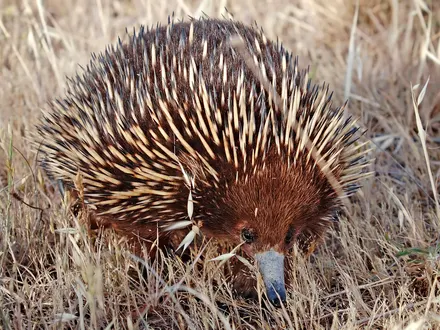
There are only five living mammals that lay eggs on Earth today, and all five belong to Order Monotremata: the Duck-Billed Platypus (Ornithorhynchus anatinus) and four species of Echidnas (spiny anteaters) native strictly to Australia and New Guinea. Despite laying soft, leathery-shelled eggs like reptiles, monotremes are 100% true mammals—covered in fur, warm-blooded, possessing three middle-ear bones, and nursing their hatched babies (puggles) with mammary milk.
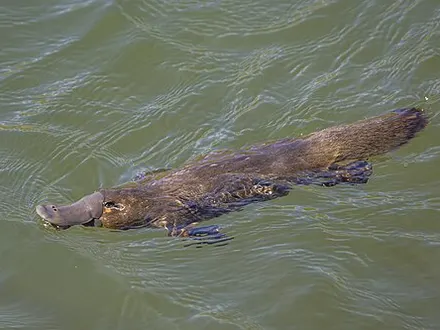
According to fossil and genomic studies archived in NCBI Taxonomy and the Australian Museum, monotremes diverged from the lineage leading to marsupial and placental mammals roughly 180 to 190 million years ago during the Early Jurassic, retaining ancestral amniote egg-laying while evolving mammalian fur and lactation.
Complete Chart of All 5 Egg-Laying Mammal Species
| Common Name | Scientific Name | Native Range | Adult Weight | IUCN Status | Signature Adaptation |
|---|---|---|---|---|---|
| 1. Duck-Billed Platypus | Ornithorhynchus anatinus | Eastern Australia & Tasmania | 0.7 – 2.4 kg |
NT (Near Threatened) | 40,000 bill electroreceptors + male venomous ankle spur |
| 2. Short-Beaked Echidna | Tachyglossus aculeatus | Australia & New Guinea | 2.0 – 7.0 kg |
LC (Least Concern) | Keratin defensive spines + temporary belly brood pouch |
| 3. Western Long-Beaked Echidna | Zaglossus bruijni | Western New Guinea highlands | 5.0 – 10.0 kg |
CR (Critically Endangered) | Downward-curved snout specialized for earthworms |
| 4. Sir David's Long-Beaked Echidna | Zaglossus attenboroughi | Cyclops Mountains, Papua | 2.5 – 4.0 kg |
CR (Critically Endangered) | Smallest Zaglossus; rediscovered on trail cameras in 2023 |
| 5. Eastern Long-Beaked Echidna | Zaglossus bartoni | Central & Eastern New Guinea | 5.0 – 10.0 kg |
VU (Vulnerable) | Five claws on forefeet, dense fur between short spines |
How Monotreme Egg-Laying & Nipple-Free Milk Patches Work
- Ten Days From Laying to Hatching: Unlike bird eggs that incubate externally for weeks, a female platypus or echidna retains the fertilized egg inside her reproductive tract for ~21–28 days while absorbing nutrients through a permeable, dime-sized leathery shell (~15–17 mm). Once laid—into a streamside burrow nest (Platypus) or directly into a muscular belly fold (Echidna)—the egg hatches in just 10 days.
- Sweating Antibacterial Milk: Newly hatched puggles are jellybean-sized and blind. Because monotremes evolved before nipples appeared in therian mammals, milk oozes onto specialized skin areola patches, where puggles lap it from grooves in the fur. Researchers discovered monotreme milk contains a unique antibacterial protein (MLP / Shirley Temple protein) that protects vulnerable young from burrow microbes.
- Zero Acid Stomach & Electroreception: Both platypuses and echidnas completely lost the genes for gastric acid (
pepsinogen) millions of years ago—their esophagus connects straight to the intestines! Underwater, a platypus closes its eyes, ears, and nostrils completely, locating shrimp and insect larvae via electroreception (detecting tiny muscular bio-electric fields).
Broader Quiz Reference: Animals That Lay Eggs vs. Live-Birth Surprises
In 20 Questions Animal Game, combining "Is it a Mammal?" (YES) with "Does it lay external eggs?" (YES) slices 365 animals straight down to 2 candidates (Platypus and Short-Beaked Echidna)! Conversely, watch out for famous non-mammals that DO NOT lay external eggs:
- Live-Bearing Reptiles (Viviparous / Ovoviviparous): Boa Constrictors, Green Anacondas, and Western Diamondback Rattlesnakes birth live young rather than laying shelled eggs on land.
- Live-Bearing Sharks & Invertebrates: Great Hammerhead Sharks, Great White Sharks, Whale Sharks, and Emperor Scorpions all deliver live miniature offspring!
Ten Sex Chromosomes, Venom Spurs & Biofluorescent Fur
Genomic sequencing published in Nature and cataloged by NCBI Taxonomy revealed three additional biological surprises that make Order Monotremata unique among all vertebrates:
- 10 Sex Chromosomes Instead of 2: Whereas humans and other placental mammals carry a single pair of sex chromosomes (
XXorXY), platypuses carry five X and five Y chromosomes (X1Y1X2Y2X3Y3X4Y4X5Y5in males) arranged in a chain during meiosis—sharing unexpected genetic homology with birdZ/Wchromosomes! - Crural Venom Glands: Adult male platypuses carry hollow keratin spurs on the inner ankles connected to venom glands that swell during the spring breeding season, delivering defensin-like peptide toxins capable of incapacitating rival males or medium-sized predators. Echidnas retain non-functional vestigial spurs lacking active venom secretion.
- UV Biofluorescence: Museum specimen scans at the Australian Museum and Northland College showed that platypus pelts absorb short-wave ultraviolet light (
200–400 nm) and re-emit bluish-green fluorescence (500–510 nm), placing monotremes alongside flying squirrels and opossums as biofluorescent nocturnal mammals.