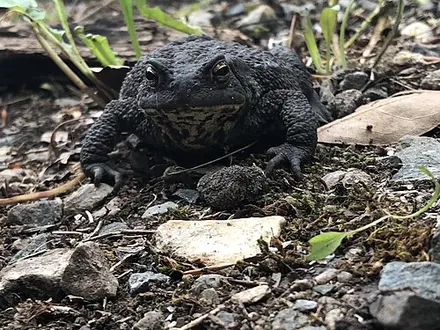
The fastest way to see the difference between a frog and a toad is to check skin moisture, behind-the-eye glands, and hind-leg length: typical frogs have smooth, wet skin, long muscular hind legs built for giant leaps, and stay close to water, whereas true toads (Family Bufonidae) have drier, bumpy wart-like skin, prominent oval parotoid poison glands right behind the eyes, and shorter hind legs made for walking or short hops across gardens and woodlands.
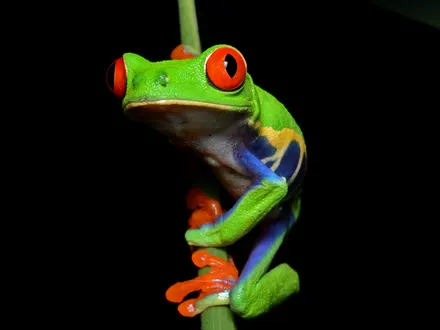
Here is the taxonomic twist that wins points in Guess the Animal Game: according to AmphibiaWeb (UC Berkeley) and ITIS, both frogs and toads belong to Class Amphibia, Order Anura (>7,600 living species). Just as tortoises are a land-adapted family inside the turtle order, true toads (Family Bufonidae) are a terrestrial-adapted family inside the frog order!
Frog vs. Toad Field Identification Table
| Field Clue | True Frogs (e.g., Ranidae, Hylidae) | True Toads (Family Bufonidae) |
|---|---|---|
| Skin Texture | Smooth, sleek, visibly moist/slimy (high cutaneous respiration) | Dry, thick, leathery & covered in bumpy tubercles (reduces water loss) |
| Parotoid Glands | Absent behind the eyes (some dart frogs secrete skin alkaloids overall) | Large raised kidney/oval swellings behind each eye secreting bufotoxin |
| Hind Legs & Motion | Longer than head + body; powerful catapult leaps & webbed swimming kicks | Shorter than head + body; crawls or makes short, low hops |
| Teeth | Tiny cone-shaped maxillary teeth along the upper jaw to grip slippery prey | Completely toothless (0 teeth; swallows insects whole via sticky tongue) |
| Egg Spawn Shape | Laid in floating gelatinous clumps / grape-like masses | Laid in long twin jelly strings / ribbons tangled around pond stems |
| Adult Habitat | Streams, marshes, pond edges & humid rainforest canopies | Gardens, meadows, forests & semi-arid burrows (returns to water to breed) |
Meet 4 Famous Anurans in Our 365-Species Catalog
Test your eye and ear on all four in Guess the Animal Sound and Zoomed In Animal Quiz:
- Red-Eyed Tree Frog (Agalychnis callidryas, 12 g): Arboreal Neotropical frog (Phyllomedusidae) using startle-coloration (deimatic behavior)—flashing neon crimson eyes and blue-and-yellow flanks when awakened.
- American Bullfrog (Lithobates catesbeianus, 550 g): North America's largest true frog (Ranidae), recognizable by an eardrum (tympanum) wider than its eye in males and a resonant jug-o-rum bass call.
- Golden Poison Frog (Phyllobates terribilis, 25 g): Diurnal Colombian rainforest frog (Dendrobatidae) whose wild diet of formicine ants fuels potent batrachotoxin skin defenses.
- Common Toad (Bufo bufo) & Cane Toad (Rhinella marina): Classic Bufonidae heavyweights featuring thick parotoid glands, zero upper-jaw teeth, and machine-gun-like nocturnal mating trills.
Cutaneous Breathing, Bidder's Organ & Vocal Sac Acoustics
Digging deeper into comparative herpetology records on AmphibiaWeb and the IUCN Amphibian Assessment explains why frogs and toads diverged so sharply in body shape despite sharing Order Anura:
- Cutaneous Gas Exchange vs. Desiccation Resistance: Aquatic and tree-dwelling frogs absorb a substantial fraction of their oxygen—and drink water—directly across thin, mucus-coated skin rich in capillary beds (especially via a vascularized belly seat-patch). True toads (Bufonidae) thickened the outer keratinized epidermis and studded it with lipid-secreting tubercles, sacrificing wet sheen so they can forage hundreds of meters away from open ponds without drying out.
- Bidder's Organ (Unique to True Toads): Nearly all male and female true toads in Family Bufonidae possess a specialized rudimentary ovary structure called Bidder's organ perched at the front tip of their gonads—an anatomical hallmark absent in Ranidae pond frogs and Hylidae tree frogs.
- Tympanum & Vocal Sac Identification: In Guess the Animal Sound, species-specific mating calls act as reproductive isolation barriers so sympatric pond amphibians never hybridize by mistake. Male tree frogs inflate a single balloon-like subgular vocal sac beneath the chin to project crisp, high-pitched peeps (
1.5–3.2 kHz), Ranidae bullfrogs use paired lateral throat pouches for low resonant booms (90–220 Hz), and male Bufonidae toads produce sustained, pulsed trills lasting 6 to 30 seconds at a stretch!