The fastest way to spot the difference between a seal and a sea lion is to check ears, flippers, and beach posture: sea lions (Family Otariidae, ITIS TSN 180617) have visible external ear flaps (pinnae), long hairless front flippers, and rotate their hind flippers forward to walk on all fours while barking loudly, whereas true seals (Family Phocidae, ITIS TSN 180641) have tiny ear holes with zero external flaps, short furry clawed front flippers, and wriggle on their bellies (galumphing) on shore.
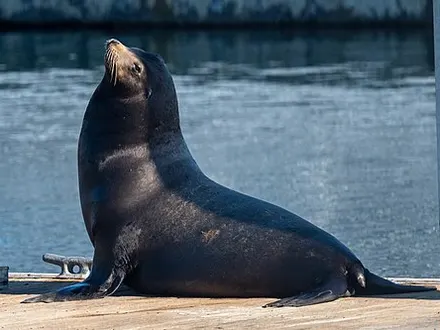
According to NOAA Fisheries and the Smithsonian National Museum of Natural History, all 33 living pinniped species descend from bear- and mustelid-like Order Carnivora ancestors (Clade Pinnipedia) that returned to the oceans roughly 24–27 million years ago, splitting into three distinct families: Phocidae (18 true seals), Otariidae (14 sea lions and fur seals), and Odobenidae (1 walrus).
Complete Seal vs. Sea Lion vs. Walrus Comparison Table
| Anatomical Clue | True Seals (Family Phocidae) | Sea Lions & Fur Seals (Family Otariidae) | Walrus (Family Odobenidae) |
|---|---|---|---|
| External Ears | None (0 pinnae; smooth pinhole ear canal) |
Visible external ear flaps (rolled leather-like pinnae) | None (internal ear openings only) |
| Front Flippers | Short, fur-covered with 5 stout digging/ice claws | Long, wing-like, leathery with tiny vestigial nails | Broad, leathery paddles (25% of body length) |
| Hind-Flipper Hip | Pelvis locked backward; cannot walk—undulates on belly | Rotates pelvis underneath hips to walk & gallop on land | Rotates pelvis forward to walk on all four limbs |
| Underwater Thrust | Side-to-side hind-flipper sculling (front limbs steer) | Up-and-down front-flipper flight (hind limbs steer) | Primarily hind-flipper sculling + benthic clam jetting |
| Onshore Voice | Soft grunts, snorts, hisses & underwater trills | Loud, carrying dog-like barks (95–110 dB rookeries) |
Pharyngeal air-sac church-bell clangs & bellows |
| Max Dive Record | 2,388 m & 120 min (Southern Elephant Seal) |
274–500 m & 10–15 min (California / Steller Sea Lion) |
80–180 m coastal shelf (10–30 min benthic foraging) |
Five Pinnipeds in Our 365-Species Game Catalog
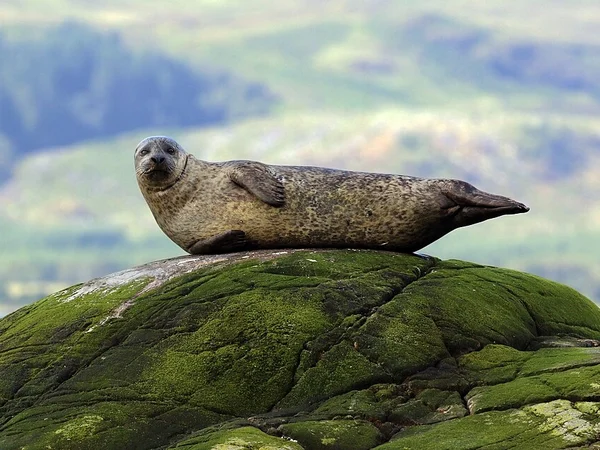
In Guess the Animal Game and Animal Guessing Game Unlimited, unlocking Order Carnivora paired with Biome: Marine / Polar immediately puts these five species on your suspect board:
- Harbor Seal (Phoca vitulina,
85–130 kg, Phocidae): Famous for resting on sandbars in the curved banana pose (head and hind flippers lifted simultaneously to conserve warmth). - California Sea Lion (Zalophus californianus,
110–390 kg, Otariidae): Adult bulls grow a pale sagittal skull crest at age5and cruise at25–40 km/husing foreflipper wingstrokes. - Northern Elephant Seal (Mirounga angustirostris, up to
2,300 kg, Phocidae): Extreme sexual dimorphism—alpha bulls weigh3× to 4×more than females and store oxygen in blood myoglobin representing20%of body mass. - Leopard Seal (Hydrurga leptonyx,
350–500 kg, Phocidae): Antarctic apex hunter equipped with three-cusped interlocking molars that strain krill like baleen and canines built for penguins, per Animal Diversity Web. - Walrus (Odobenus rosmarus,
1,050–1,700 kg, Odobenidae): Uses400–700hyper-sensitive snout vibrissae (mystacial whiskers) rather than tusks to locate up to6,000buried clams per feeding session!
Why Fur Seals Fool Players & Deep-Diving Blood Chemistry
Two physiological facts documented by NOAA Marine Mammal Laboratory explain why true seals dive four times deeper than sea lions:
- The "Fur Seal" Naming Trap: Northern Fur Seals (Callorhinus ursinus) and Antarctic Fur Seals (Arctocephalus gazella) are eared Otariidae—cousins of sea lions with
300,000hairs per square inch—not true Phocidae seals! - Exhaling Before a
2,000-MeterDive: Unlike human free-divers who inhale before submerging, Phocidae elephant and Weddell seals exhale up to85%of lung air at the surface so nitrogen cannot dissolve into the bloodstream under200 atmospheresof pressure—preventing decompression sickness (the bends) while drawing oxygen from oversized spleens!