The clearest difference between a turtle and a tortoise comes down to where they live and how their feet and shells are built: tortoises (Family Testudinidae) are strictly terrestrial herbivores with heavy, high-domed shells and columnar, elephant-like feet built for walking over dry ground, whereas turtles live primarily in oceans, rivers, or ponds, sporting flatter, hydrodynamically streamlined shells and webbed claws or wing-like flippers for swimming.
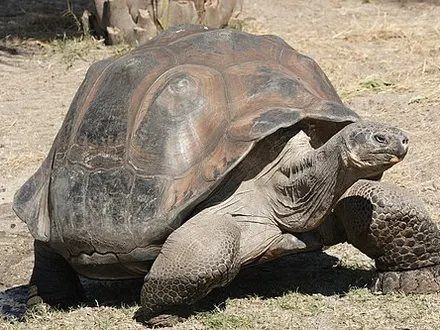
Taxonomically—per ITIS and the IUCN Tortoise and Freshwater Turtle Specialist Group—both belong to Order Testudines (~360 living species). That means every tortoise is nested inside the broader evolutionary turtle order, even though everyday English reserves "tortoise" strictly for land-only members of Family Testudinidae.
Side-by-Side Turtle vs. Tortoise Comparison Chart
| Feature | Tortoise (Family Testudinidae) | Aquatic / Marine Turtle (Other Testudines) |
|---|---|---|
| Primary Habitat | 100% Terrestrial (deserts, islands, scrub, grasslands; cannot swim) | Oceans, coral reefs, rivers & lakes (comes ashore mainly to bask or lay eggs) |
| Feet & Limbs | Stumpy, unwebbed columnar hind legs; club-like forelimbs for digging burrows | Wing-like marine flippers (Cheloniidae) or webbed clawed feet |
| Carapace (Upper Shell) | High, heavy dome (resists predator jaws compressing the shell) | Low, teardrop/flat profile (minimizes drag through water) |
| Head Retraction | Pulls head & thick scaly forelimbs completely inside shell | Freshwater sliders retract; sea turtles cannot retract their heads into their shells |
| Typical Diet | Primarily Herbivore (cacti, grasses, fallen fruit, leafy greens) | Omnivore or Carnivore (jellyfish, sponges, crabs, fish, seagrass) |
| Typical Lifespan | 80 – 150+ years (Galápagos & Aldabra Giant Tortoises) |
30 – 80 years (Green Sea Turtle ~75 yrs; Common Snapping Turtle ~45 yrs) |
Marine Flippers vs. Freshwater Claws vs. Box Turtles
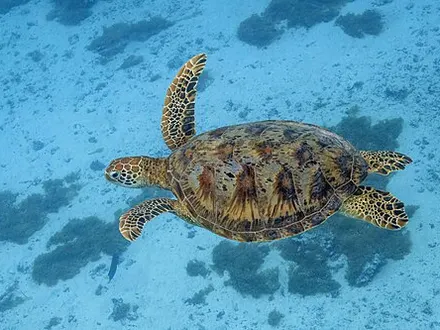
Three tricky edge cases frequently appear in wildlife trivia and our 365-Species Unlimited Survival Mode:
- Leatherback vs. Hard-Shelled Sea Turtles: Most sea turtles (Green, Hawksbill, Loggerhead) wear keratin scutes over fused bone, whereas the 400 kg Leatherback Sea Turtle (Dermochelys coriacea) lacks a hard bony carapace entirely—wearing a flexible, seven-ridged leathery hide that compresses safely during 1,000-meter deep dives after jellyfish!
- North American Box Turtles (Genus Terrapene): Despite living on forest floors with high-domed shells like tortoises, Box Turtles actually belong to the pond turtle family (Emydidae)—distinguished by a hinged bottom plastron that snaps shut like a sealed box.
- Terrapins: Used in British and coastal American English for hard-shelled aquatic species inhabiting freshwater or brackish tidal marshes (especially the Diamondback Terrapin along the US Atlantic and Gulf coasts).
Shell Anatomy, Neck Folding (Cryptodira vs. Pleurodira) & Longevity
Every member of Order Testudines documented in The Reptile Database builds its armor from 50 to 60 fused bones: the dorsal carapace forms directly from expanded ribs and thoracic vertebrae, while the ventral plastron incorporates clavicles and gastralia. Because the ribcage is fused rigid into the shell, neither turtles nor tortoises can expand their chests to breathe; instead, specialized abdominal sling muscles pump air in and out of the lungs above the viscera.
Zoologists also divide living chelonians into two evolutionary suborders based on how they tuck their necks away from danger:
- Hidden-Necked Chelonians (Suborder Cryptodira): Pull the head straight backward into an vertical S-curve inside the shell—including all true tortoises (Testudinidae), pond sliders (Emydidae), snapping turtles (Chelydridae), and marine sea turtles (Cheloniidae, which secondarily lost full retraction to accommodate streamlined salt glands and jaw muscles).
- Side-Necked Turtles (Suborder Pleurodira): Fold the neck sideways horizontally beneath the front rim of the carapace—characteristic of Southern Hemisphere freshwater species such as South America's leaf-mimicking Mata Mata (Chelus fimbriata) and Australian snake-necked turtles.
Slow ectothermic metabolism, heavy bony armor, and enhanced DNA-repair gene copies allow giant island tortoises—such as Jonathan, an Aldabra Giant Tortoise hatched around 1832 (>190 years old), and Galápagos Giant Tortoises recorded past 170 years on the IUCN Red List—to outlive every other terrestrial vertebrate on Earth. Try spotting both marine flippers and tortoise domes at 2.6× magnification in Zoomed In Animal Quiz!